

Imagine waking up to the sound of a river just beyond your window, the scent of native plants blooming overhead, and the sun streaming in through reclaimed wood-framed windows. This isn’t a luxury resort or an eco-retreat, it’s a private residence built with nature, not just near it. One of the standout features? A living roof. This home doesn’t just sit on the land, it becomes part of it.
Where Nature and Innovation Meet
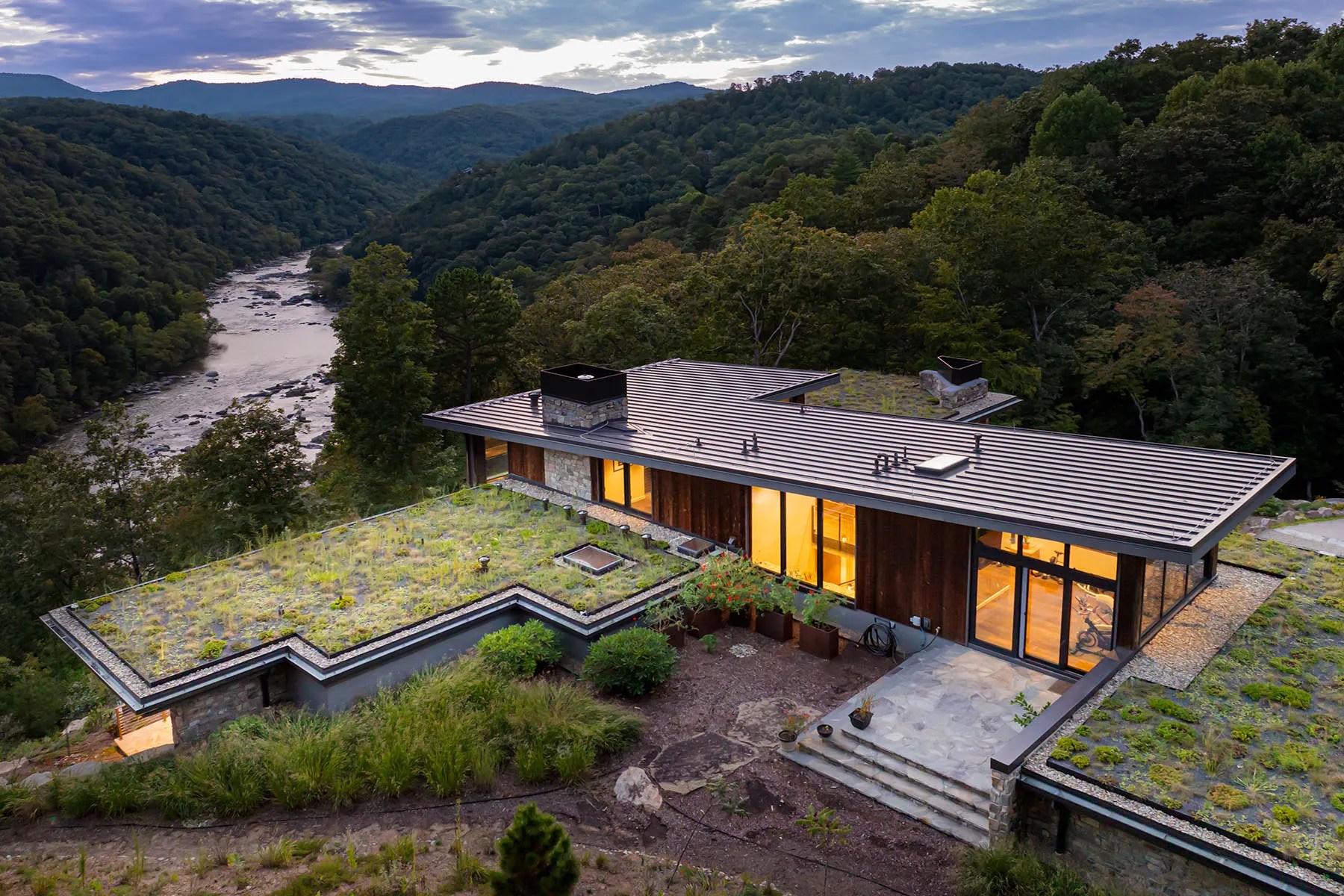
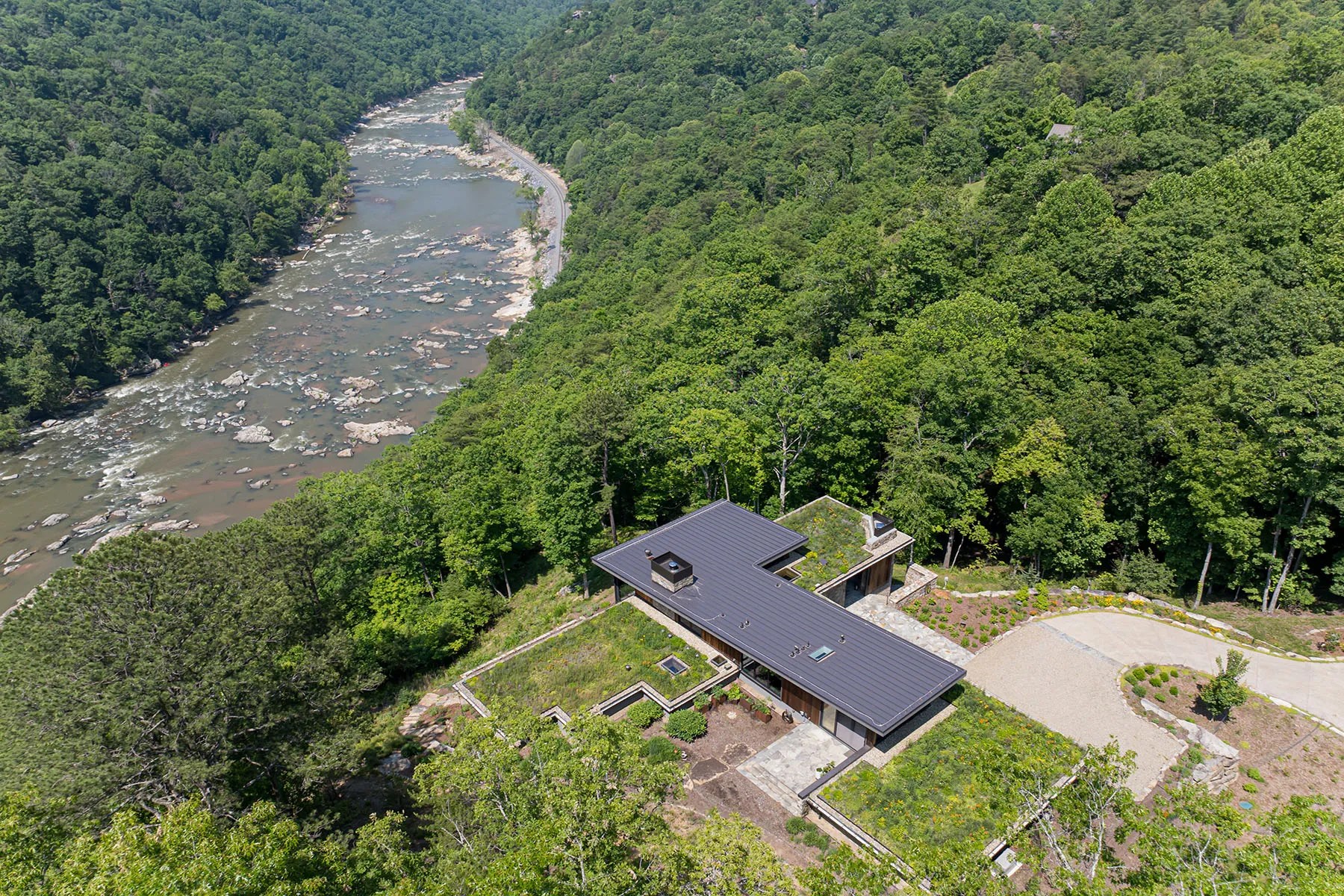
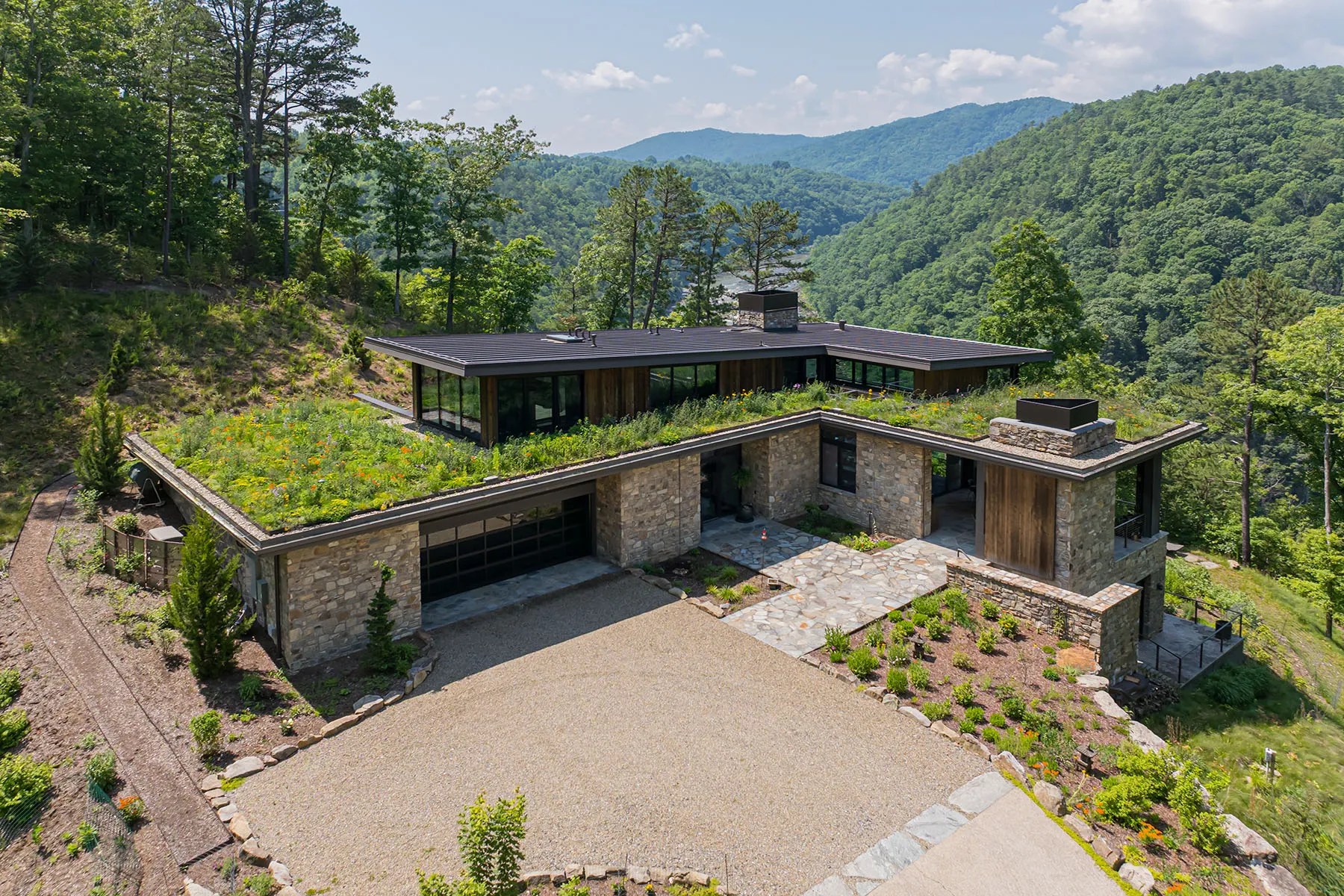
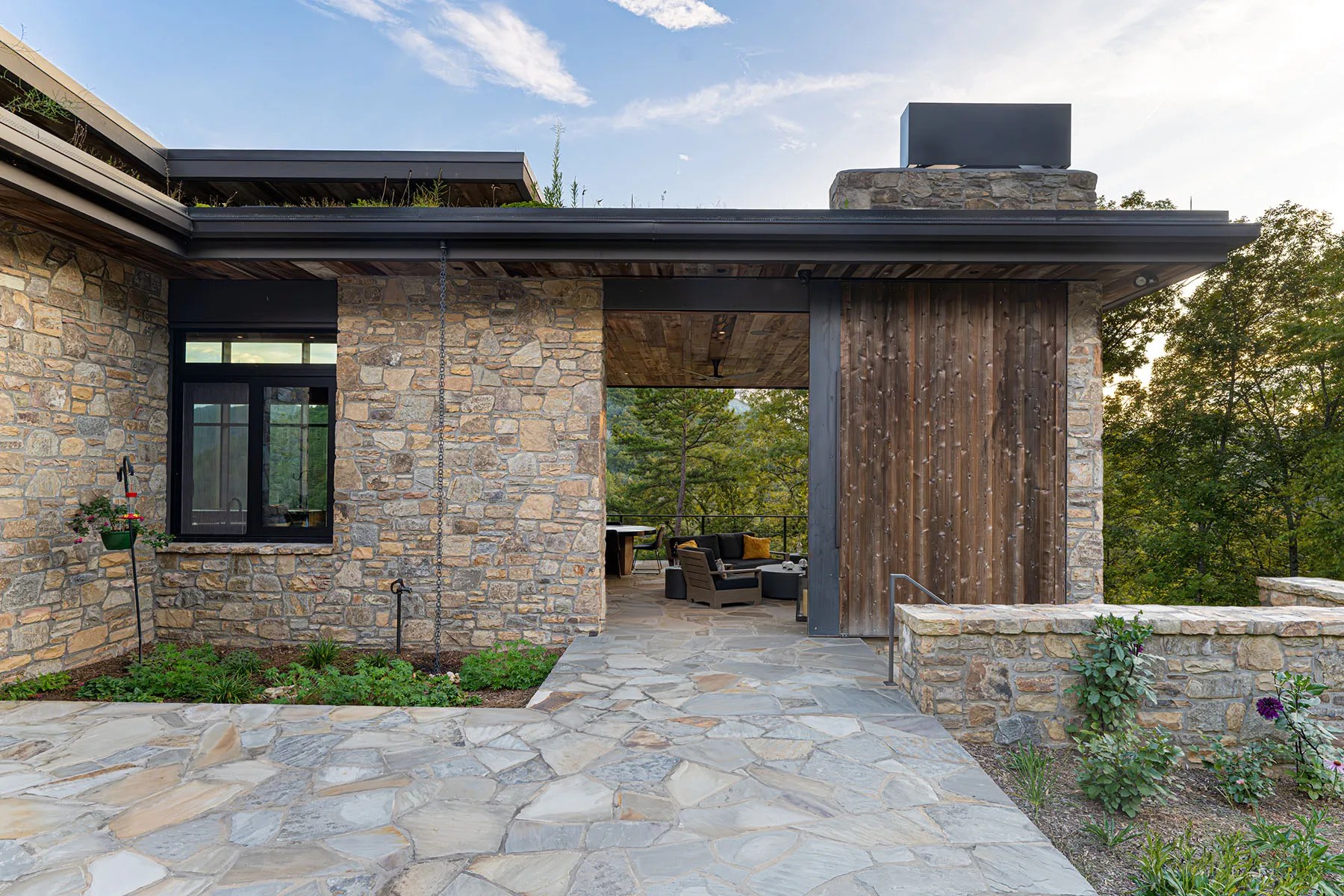
Tucked along a graceful bend of the French Broad River, this one-of-a-kind modern residence redefines what it means to live in harmony with nature. With a seamless blend of stone, steel, wood, and glass, the architecture speaks the language of its surroundings. But what truly sets this home apart is its integration of living roofs, green, planted surfaces that offer a host of environmental, architectural, and aesthetic benefits. In this post, we’re diving deep into the living roof concept: what it is, why architects use it, and how it elevates both function and feeling in this remarkable home.
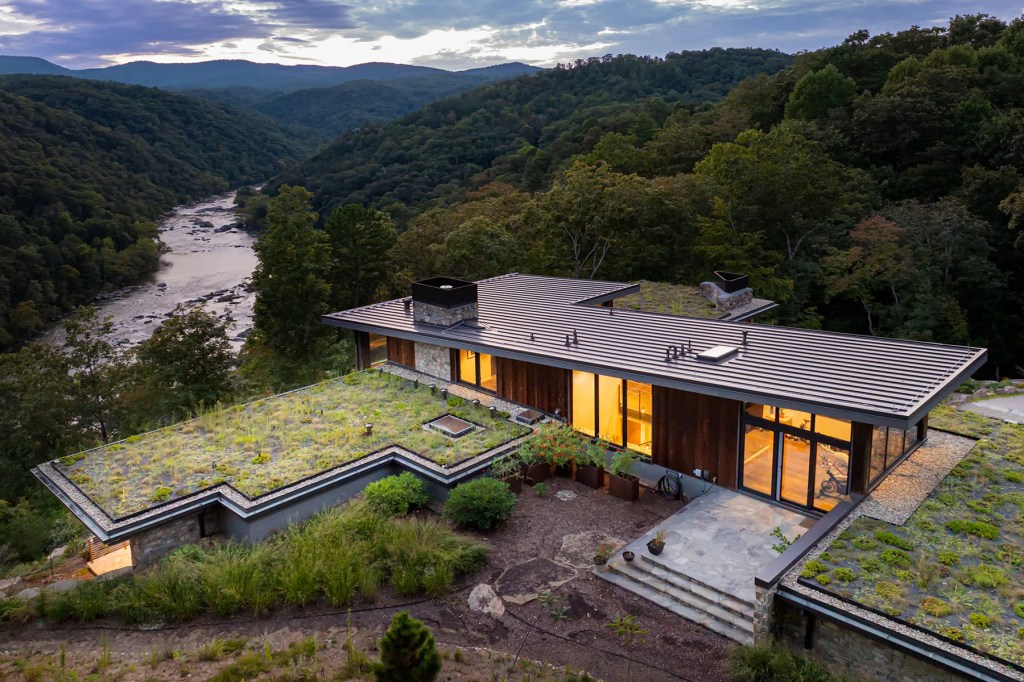
What Is a Living Roof?
A living roof, also known as a green roof, is a roof that is partially or completely covered with vegetation and a growing medium, planted over a waterproofing membrane. Often, these systems also include root barriers, drainage layers, and irrigation systems. Living roofs can be intensive (deep soil, supports a wide variety of plants) or extensive (shallower soil, lower maintenance, typically with drought-tolerant vegetation).
While the concept has gained traction in modern sustainable design, it isn’t entirely new. Ancient civilizations like the Vikings and early Icelandic societies used sod roofs for insulation and integration with the landscape. Today, living roofs are a conscious design decision for sustainability, insulation, biodiversity, and aesthetics.

Why Are Living Roofs Important?
- Energy Efficiency
Living roofs act as natural insulators. They reduce heat gain in the summer and heat loss in the winter, lowering the need for mechanical heating and cooling. This results in lower energy bills and reduced environmental impact. - Stormwater Management
These roofs can absorb and filter rainwater, reducing runoff, flooding, and strain on city systems. This home, nestled so close to the French Broad River, benefits directly by managing its own footprint to protect the surrounding ecosystem. - Improved Air Quality
Plants on green roofs help capture airborne pollutants and CO2, purifying the air and contributing to a healthier microclimate around the home. - Biodiversity
Living roofs support local wildlife, offering habitats for birds, bees, and butterflies, especially when native species are used in planting, as seen with the curated native landscaping around this home. - Extended Roof Life
By protecting the roof membrane from UV rays and temperature extremes, green roofs can double or triple the lifespan of the roof. - Aesthetic Value & Wellness
There’s something inherently calming about greenery. Views of vegetation, even from inside, can reduce stress and improve cognitive function. Living roofs allow homeowners to surround themselves with beauty and vitality.
Why Architects Are Embracing Green Roofs
Architects are increasingly designing with green roofs not as a trend but as a strategic, meaningful choice. Here’s why:
- Sustainability as a Standard: As building codes evolve and climate concerns grow, architects are turning to living roofs to meet green building standards like LEED and Passive House.
- Blending With the Landscape: Green roofs help buildings nestle into the landscape instead of standing apart from it, a key aesthetic choice for properties in scenic or natural areas.
- Noise Reduction: The soil and plants on living roofs also provide sound insulation—a major bonus for homes near water, roads, or urban centers.
- Design Freedom: Living roofs allow for design creativity, from usable rooftop gardens to invisible eco-insulation in modern minimalistic builds.

This Home: A Living Case Study
This French Broad River home doesn’t just feature a green roof, it builds a narrative around it. The structure harmonizes modern architectural principles with organic materials and native flora, offering a full-bodied experience of what sustainable living can look and feel like.
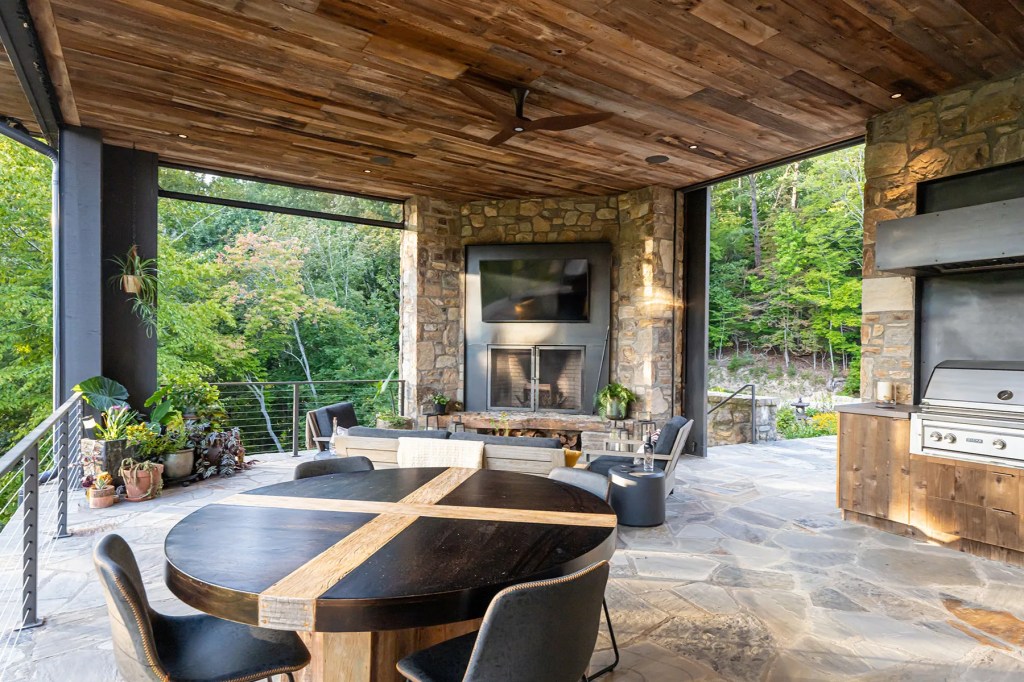
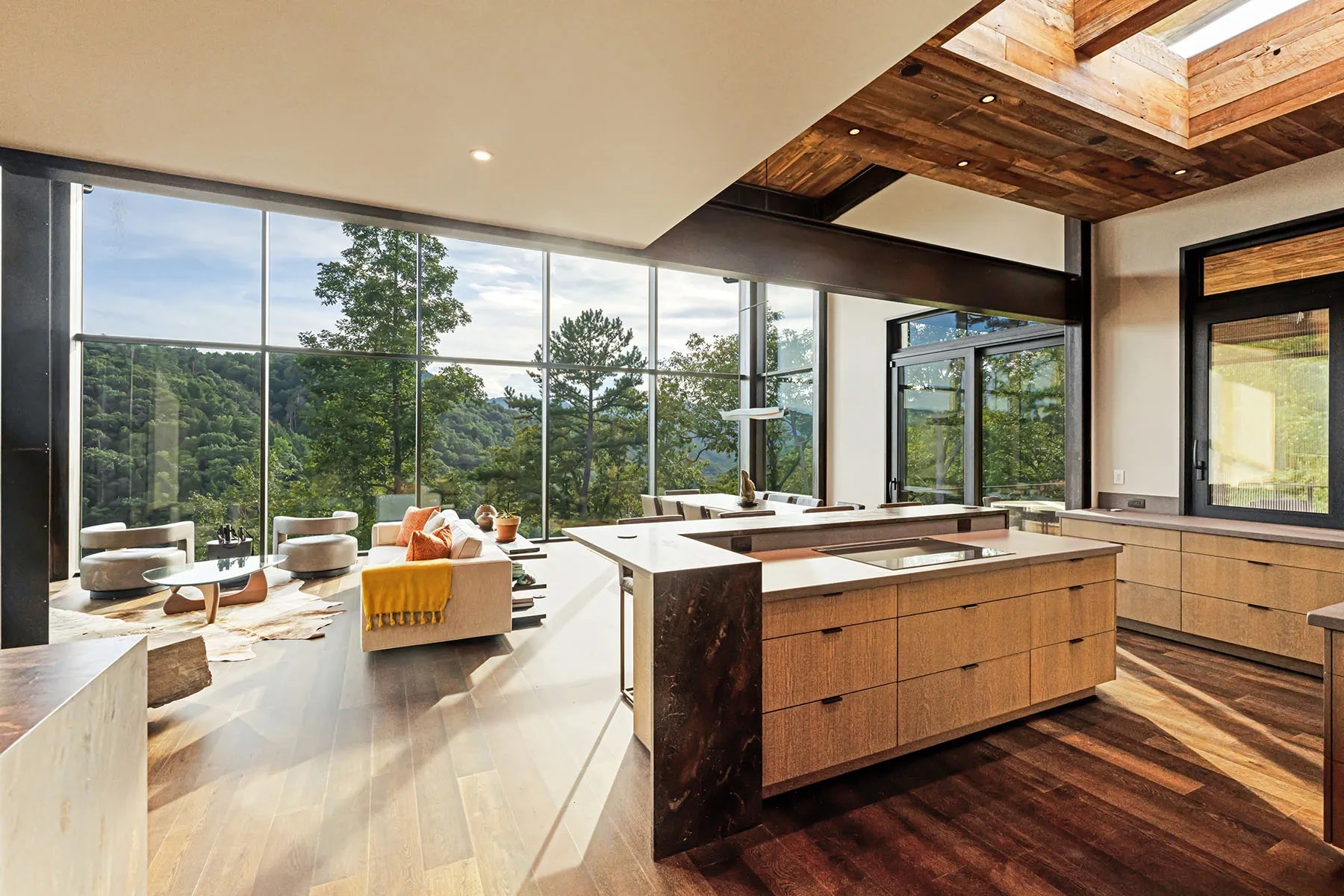
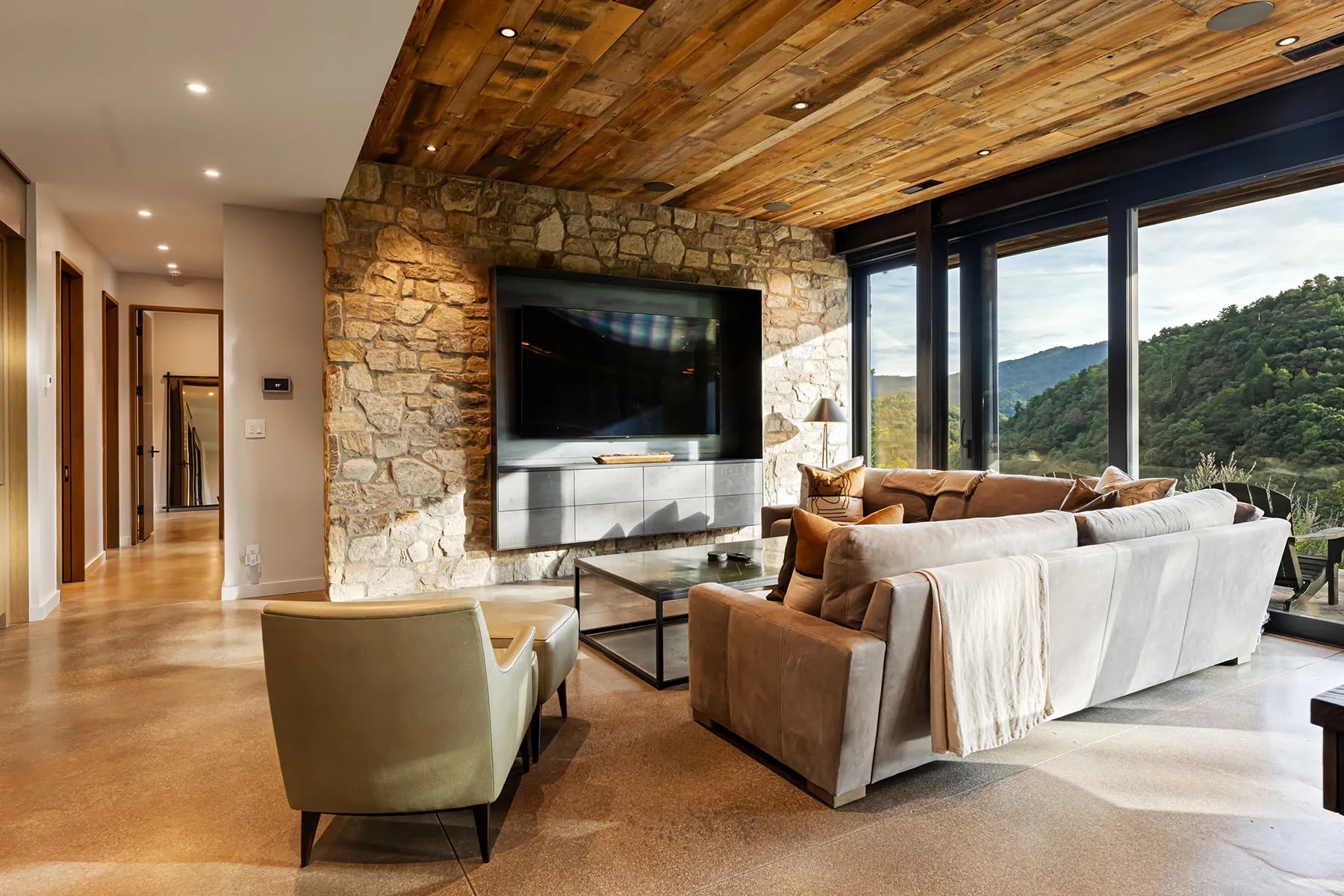
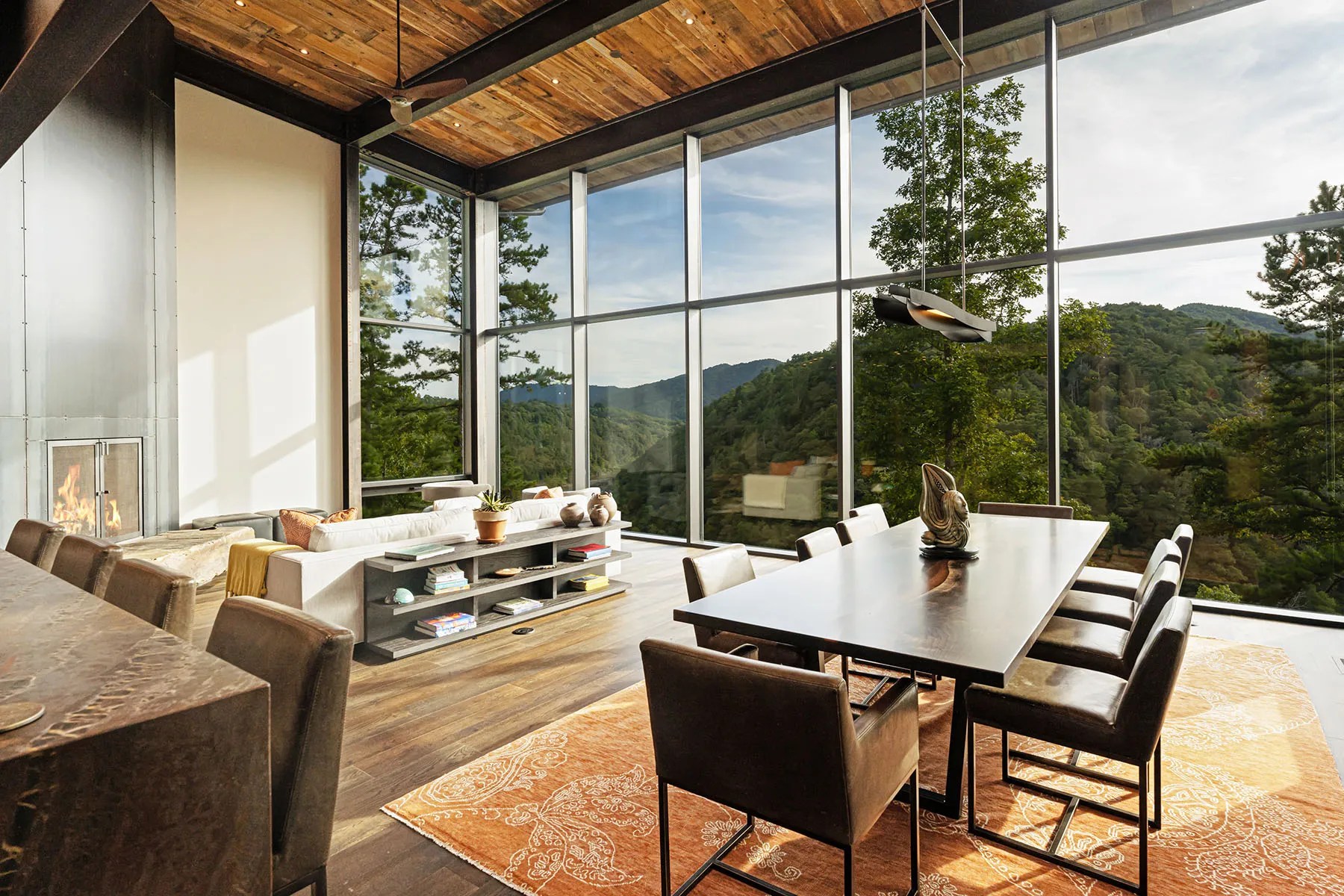
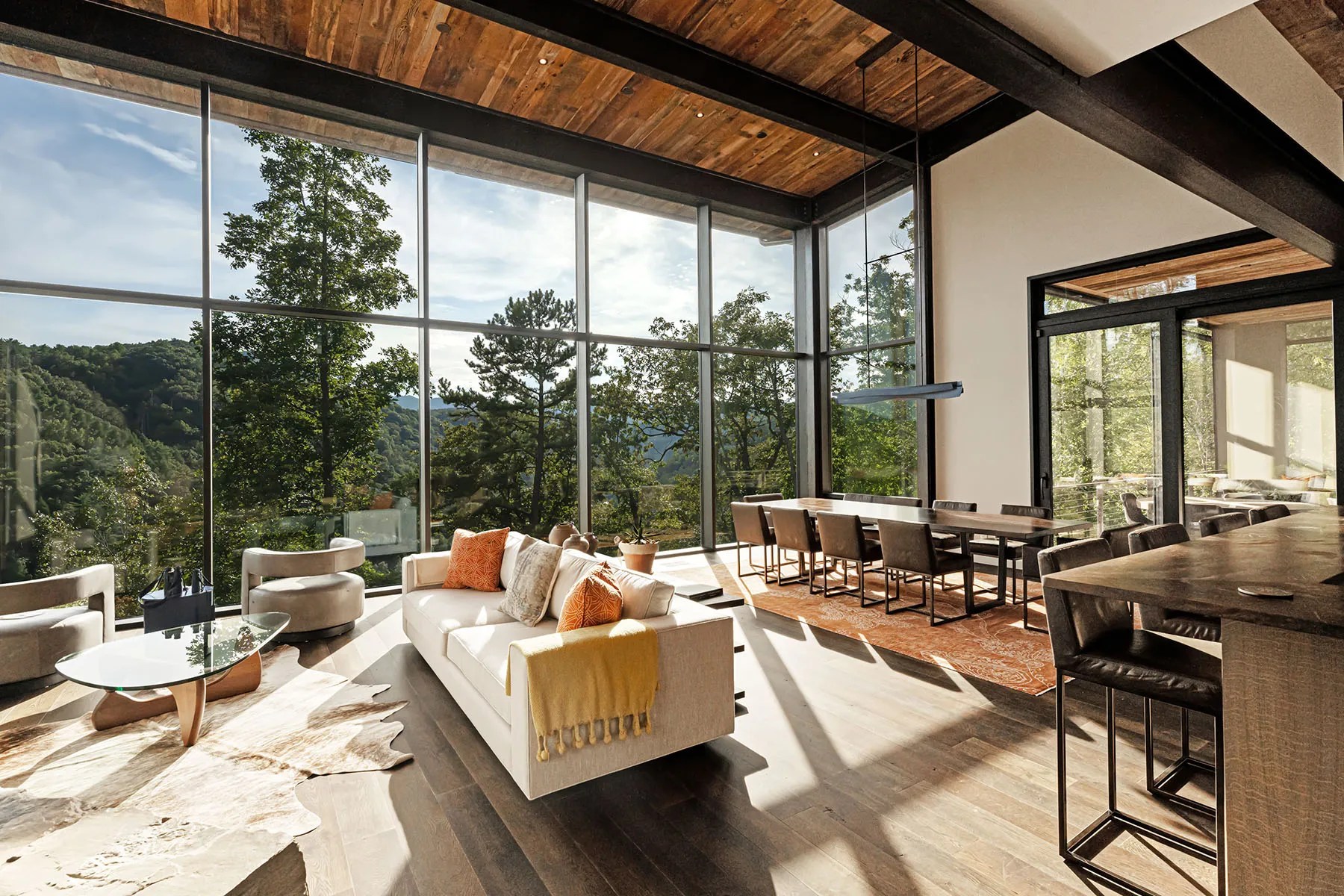
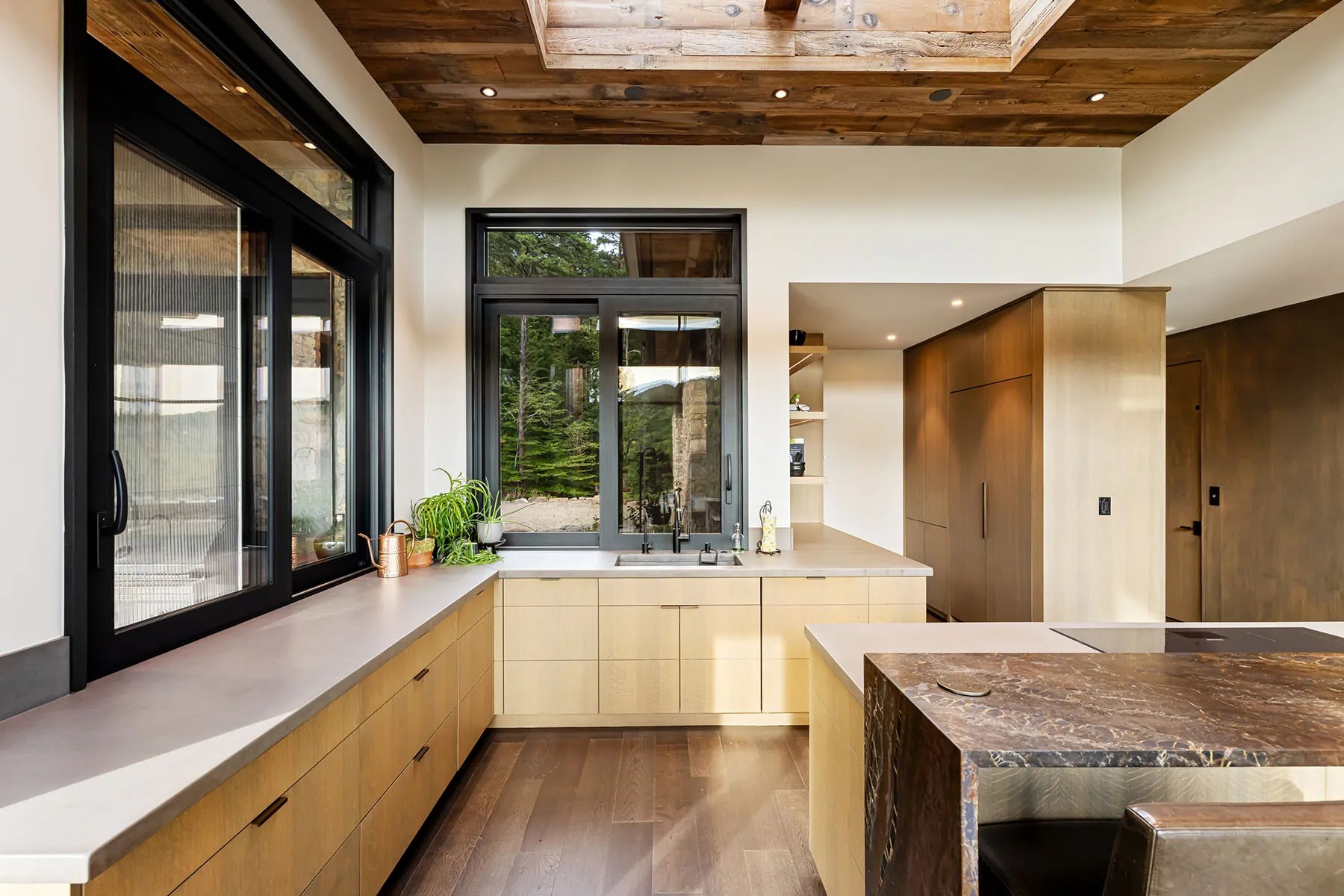
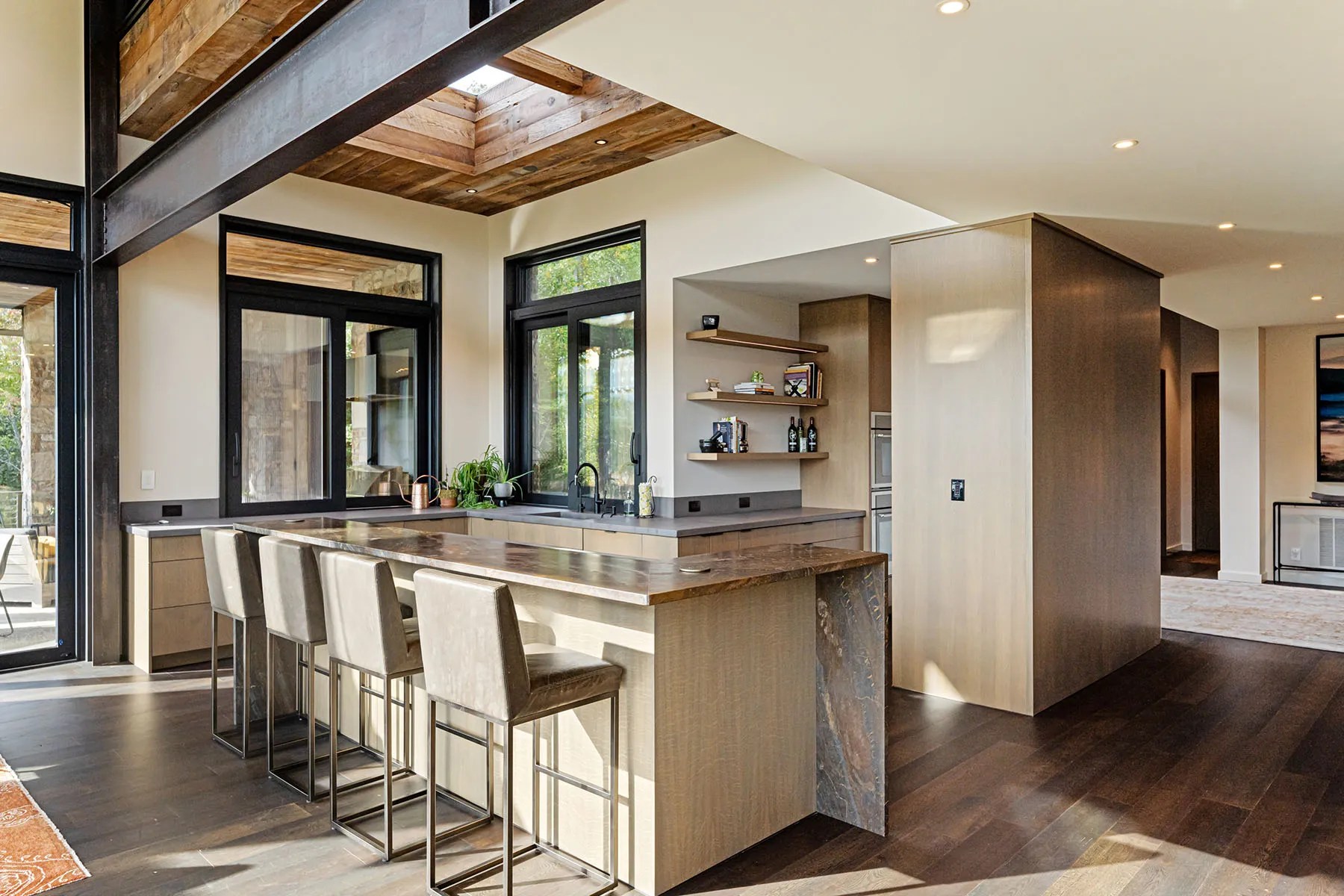
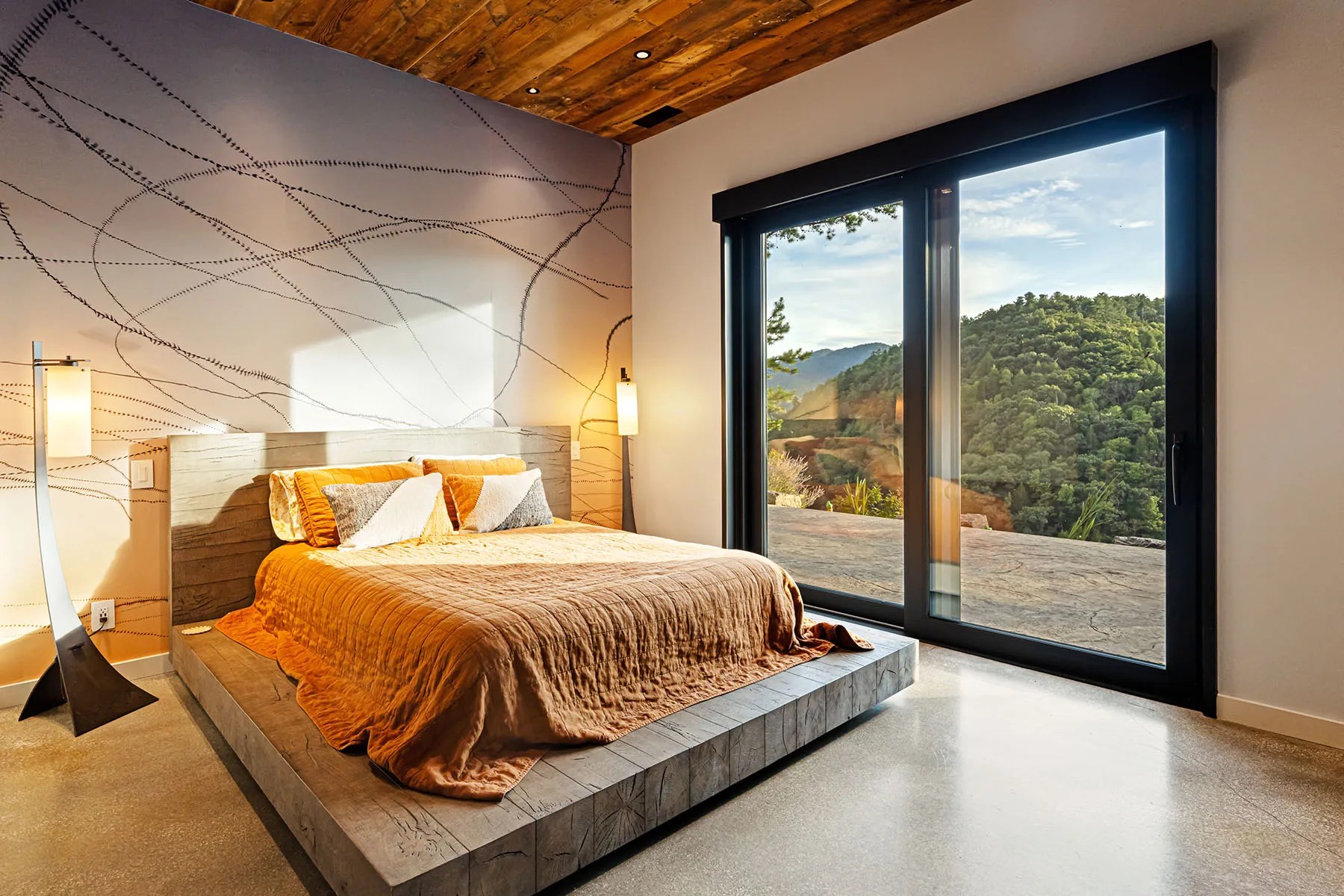
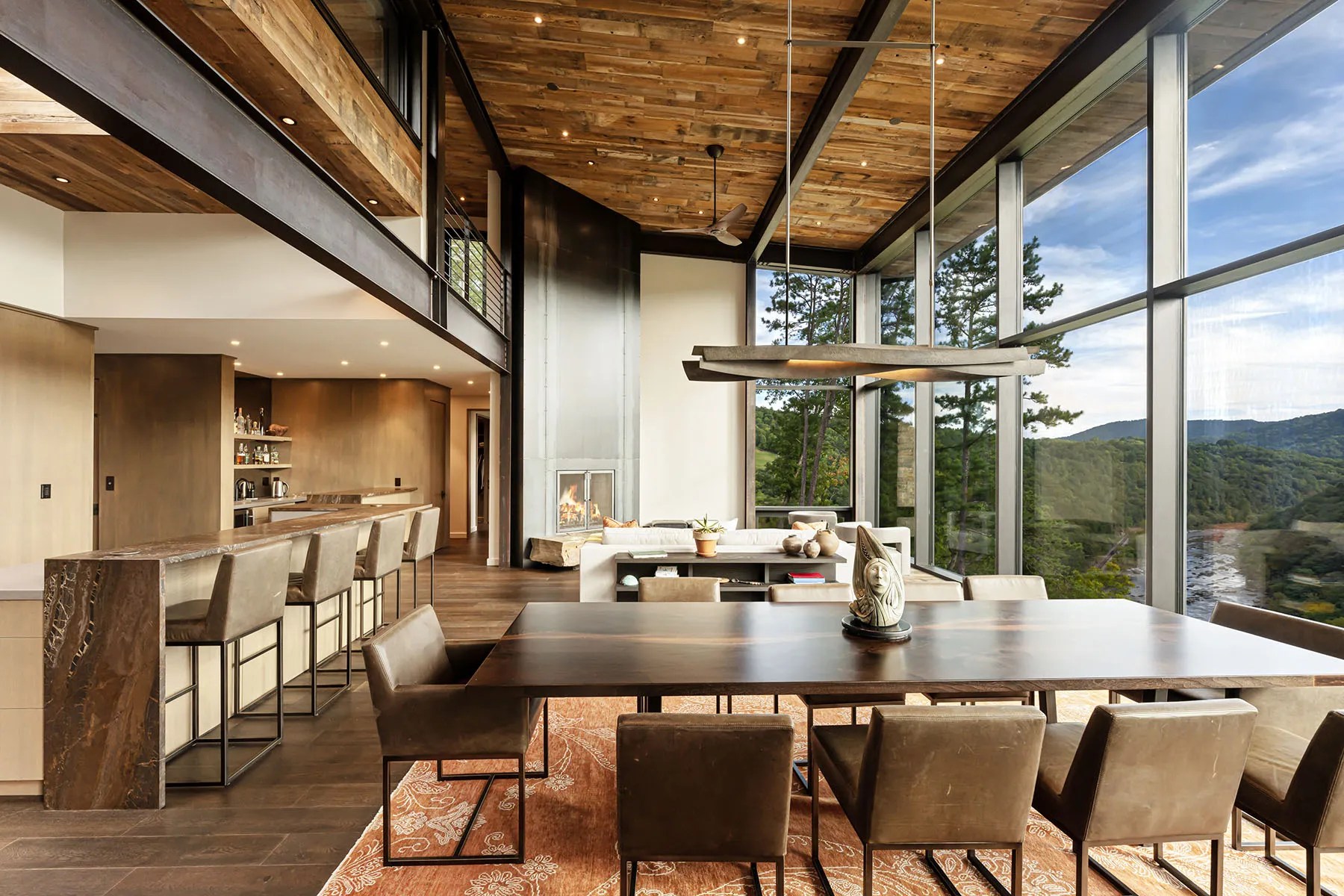
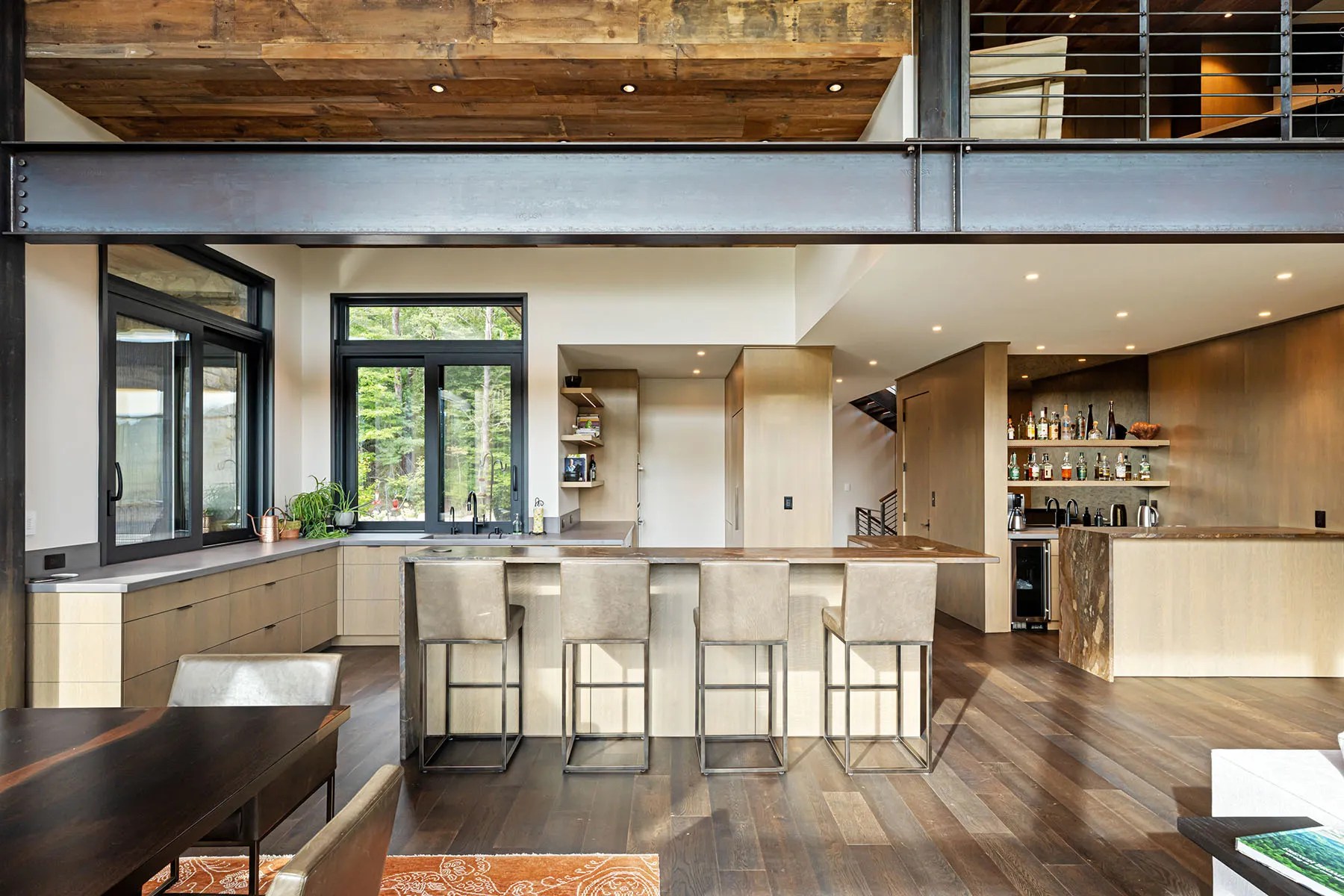
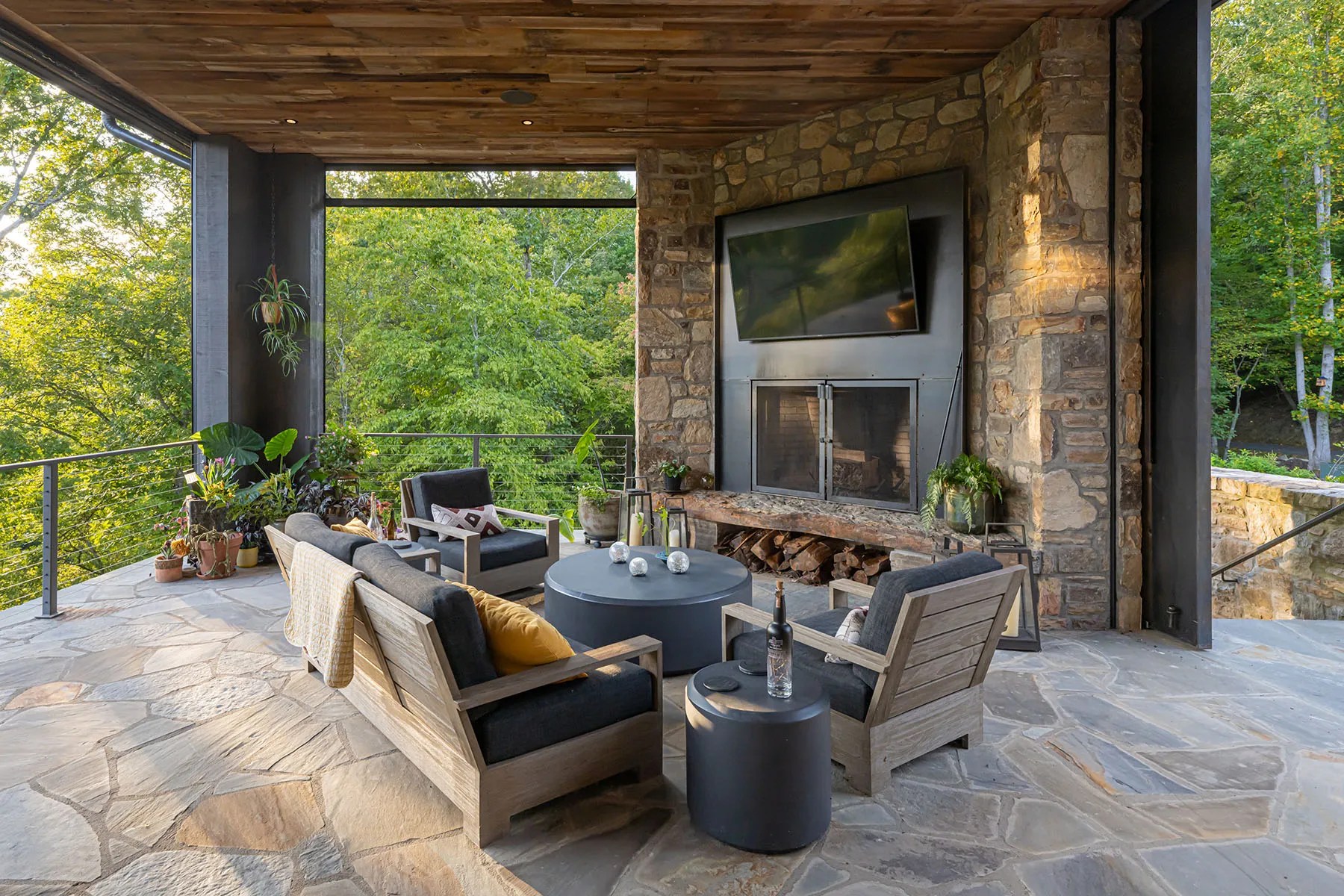
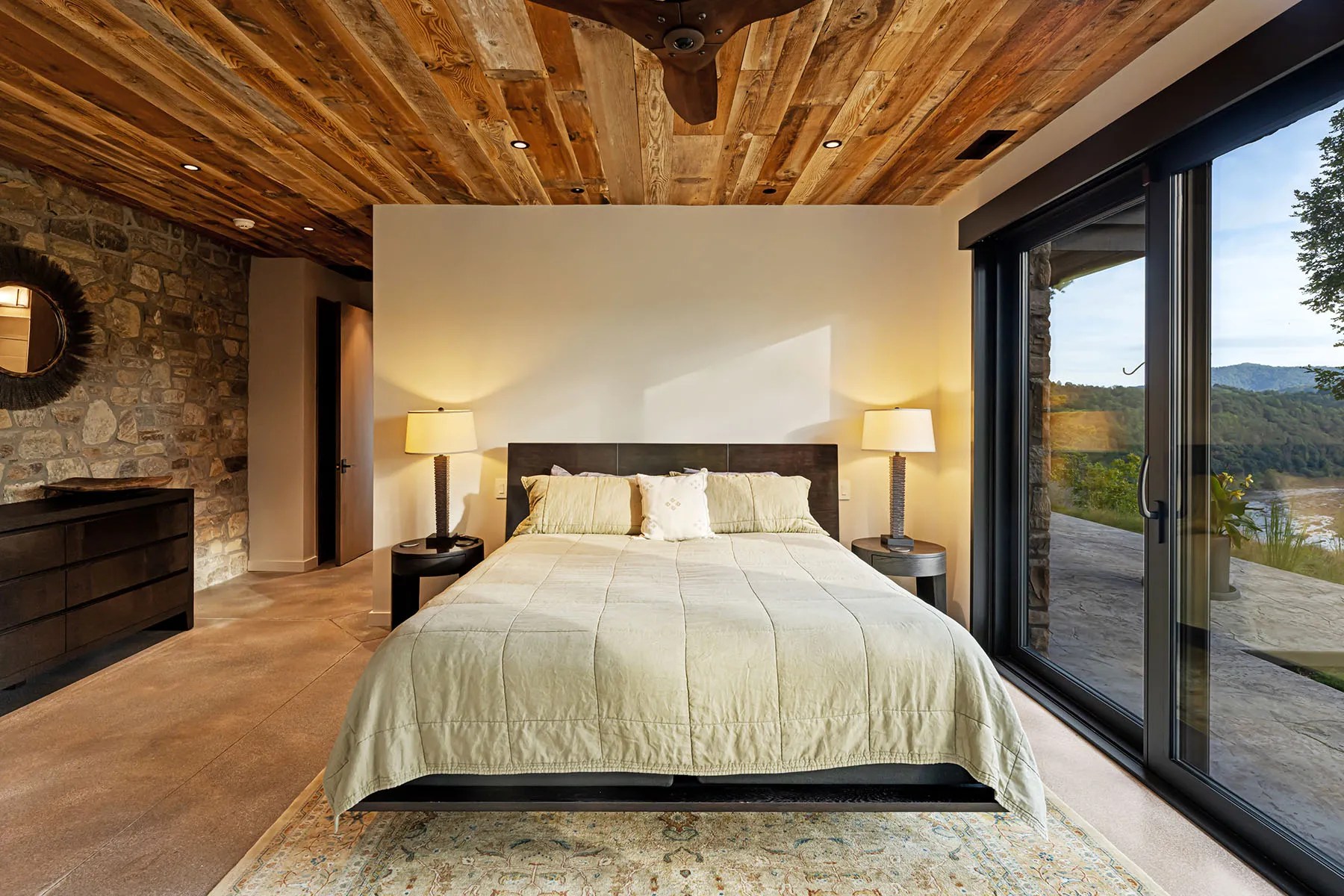
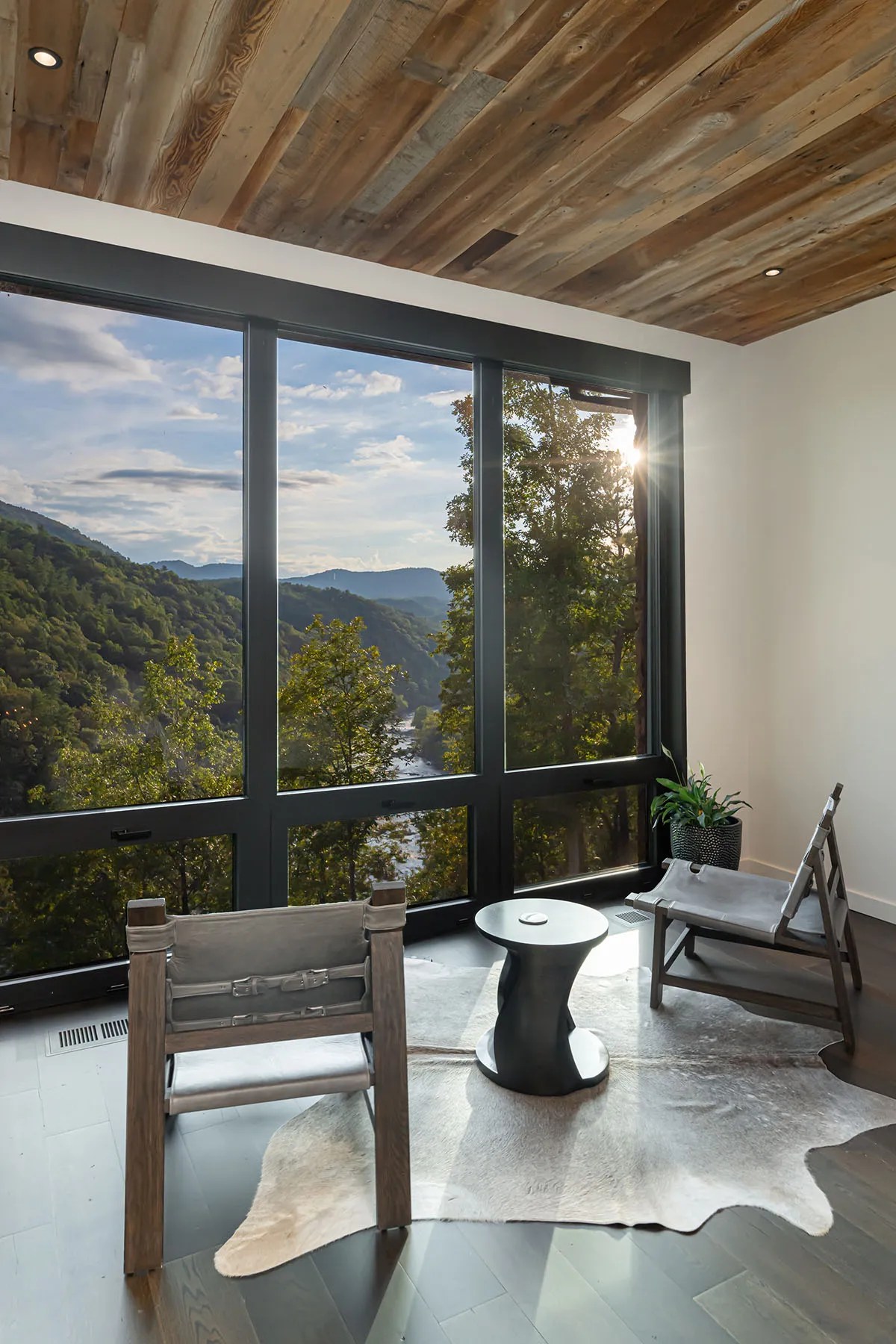
- Materials That Tell a Story: Reclaimed hemlock ceilings bring warmth and texture, while stone walls and raw-steel fireplaces ground the design. These aren’t just aesthetic choices, they reflect a deeper commitment to conservation and craftsmanship.
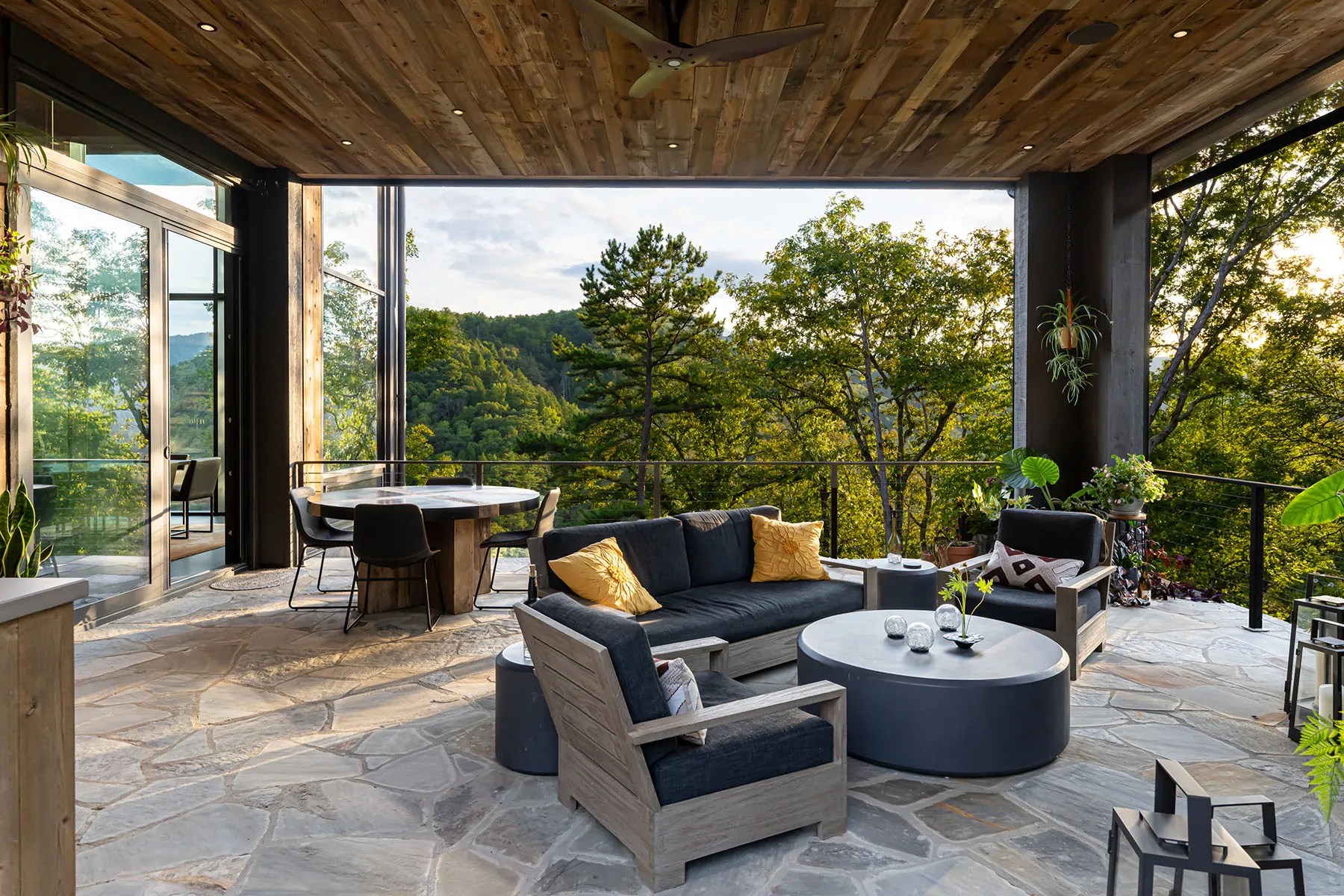
- Living in the Landscape: With floor-to-ceiling windows framing the river and mountains, and a layout designed to immerse each room in the outdoors, the home’s green roof isn’t just a passive feature, it’s part of an immersive ecosystem.
- Layered Living Spaces: The main level features a spacious kitchen and great room that extend to a screened porch, creating a seamless flow between indoor and outdoor spaces. Upstairs, the office and workout areas are wrapped in glass. Downstairs, the terrace and bocce court invite social connection while maintaining the quiet serenity of river views.
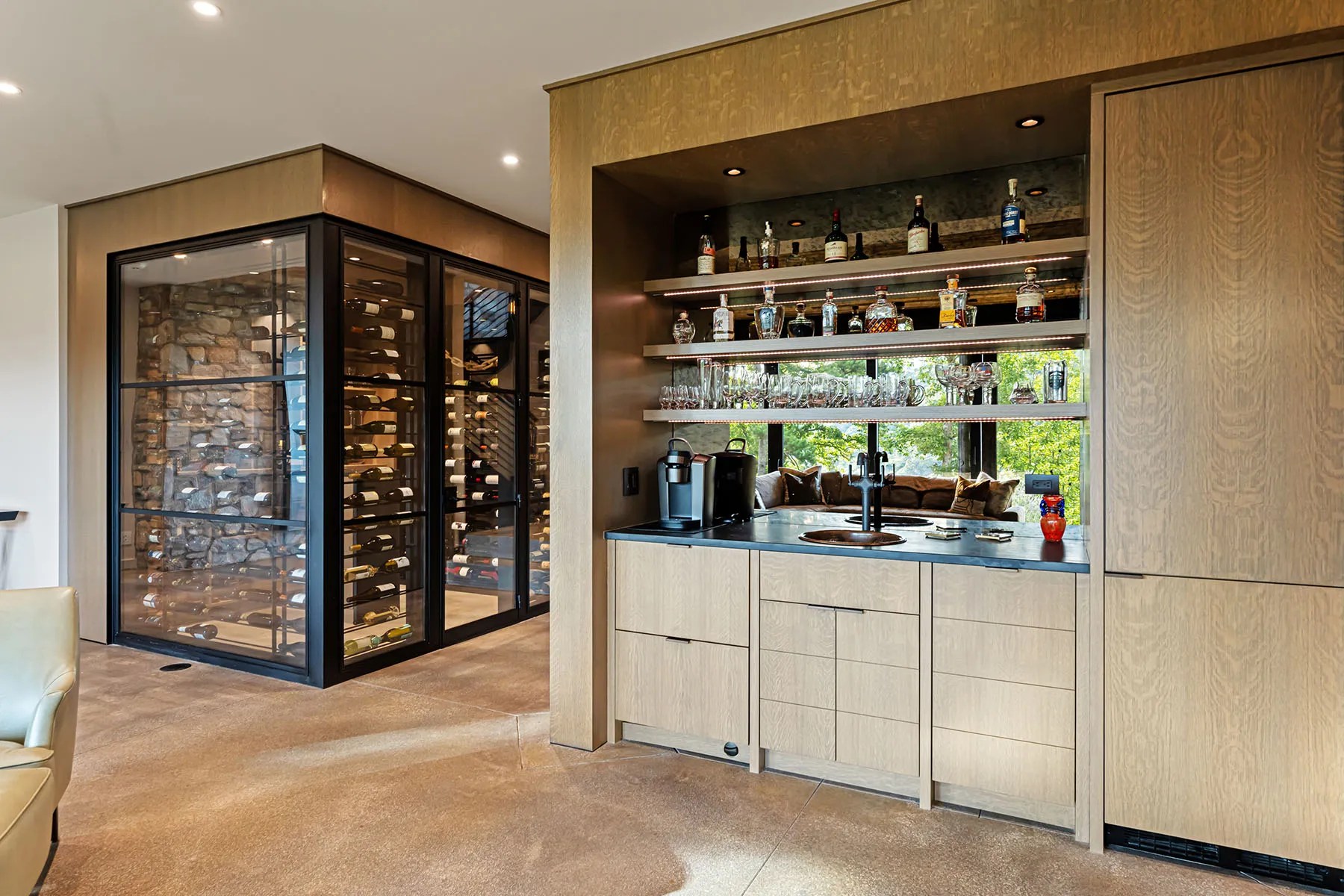
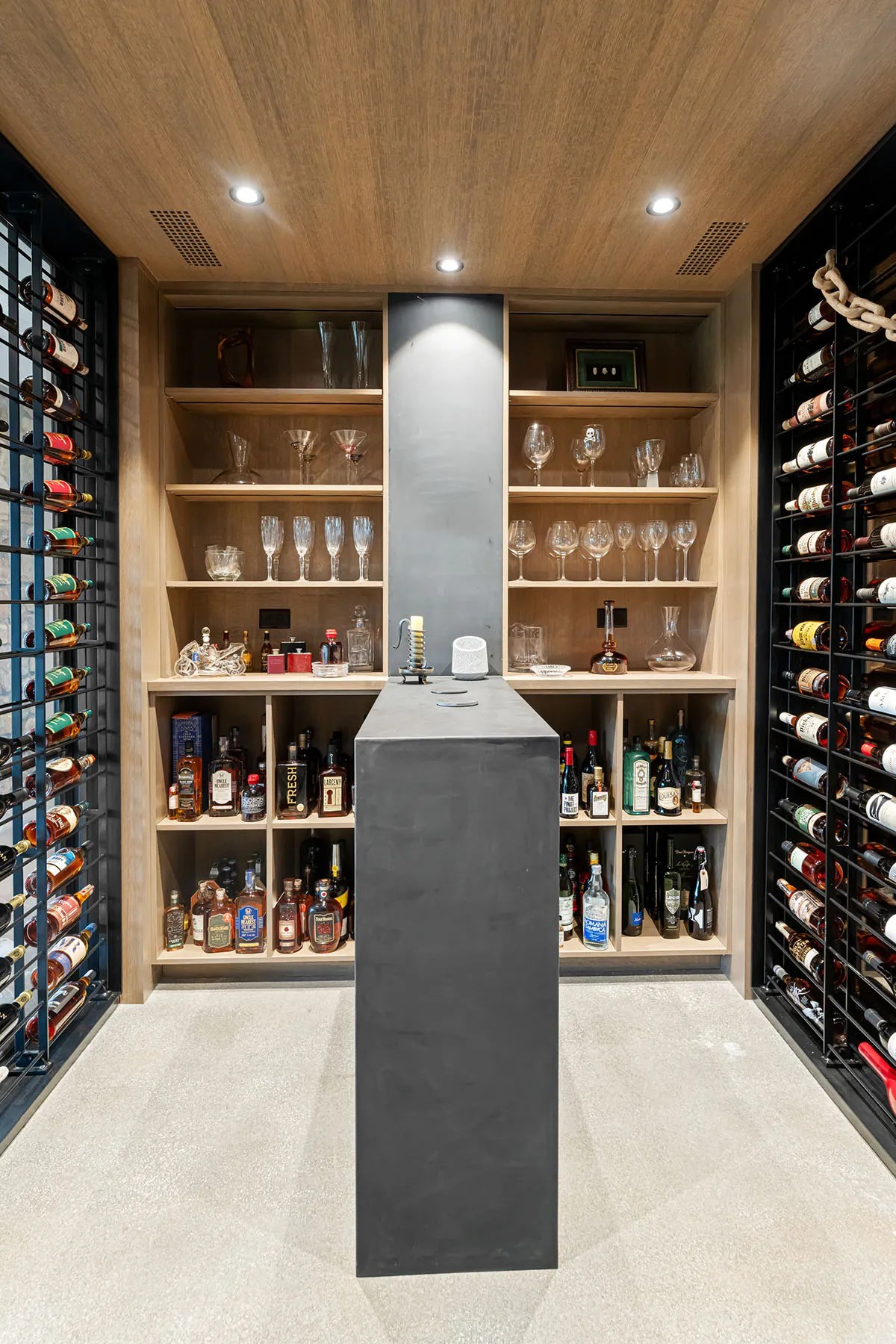
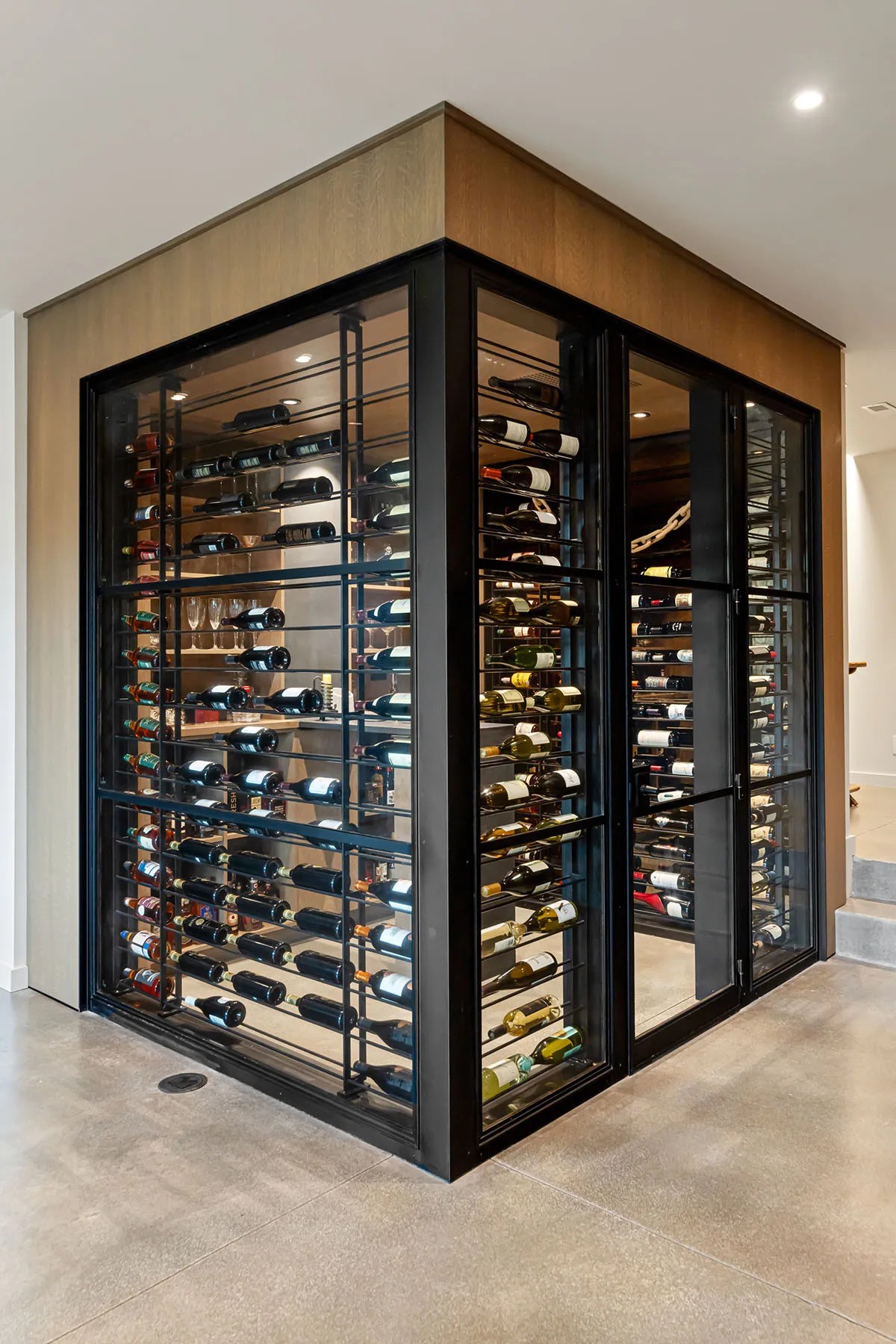
- Eco-Minded Luxury: From the spa-like bathroom in the primary suite to the curated native plantings and glass wine room, luxury and sustainability go hand in hand. The living roof is not a compromise, it’s an upgrade.
Final Thoughts: More Than Just a Roof
Green roofs aren’t just about sustainability; they’re about making a home feel like it belongs. In a world where disconnection from nature is the norm, this home proves that design can bring us back into a relationship with the land. Thoughtful choices, like using reclaimed materials, orienting views toward natural beauty, and choosing living roofs, create a home that feels alive.
For homeowners, real estate enthusiasts, and design lovers alike, this house is a stunning example of how architecture can nurture both the planet and the people living in it.
More Hidden Holms Like This
→ 5 Gorgeous Homes That Will Make You Want to Move to Upstate New York Today
→ A Whimsical Hillside Estate in Woodstock, Vermont
→ Creekfront Cabin Retreat with Guest House & Private Trout Fishing | Aska Adventure Area Georgia
✉️ Stay Connected
Follow @HiddenHolms on Instagram and YouTube for more architecturally interesting finds.
Join our email list for weekly roundups of beautiful homes across the Northeast and beyond.
📎 Listing Info & Credit
Listed by: Marilyn Wright | Premier Sotheby’s International Realty (828) 279-398
🔗 View the Full Listing: 112 Moon Shadow Ln, Marshall, NC 28753
📸 All photos credited to the original listing agent or platform. Shared for editorial and appreciation purposes only. If you’re the homeowner or photographer and would like your listing removed or credited differently, please contact me.
Disclaimer: Hidden Holms is a curated editorial platform sharing notable architecture and design. We do not represent the properties featured or claim ownership of any listing media. All content is shared for discovery and commentary purposes only, with credit to original sources.





















Leave a comment